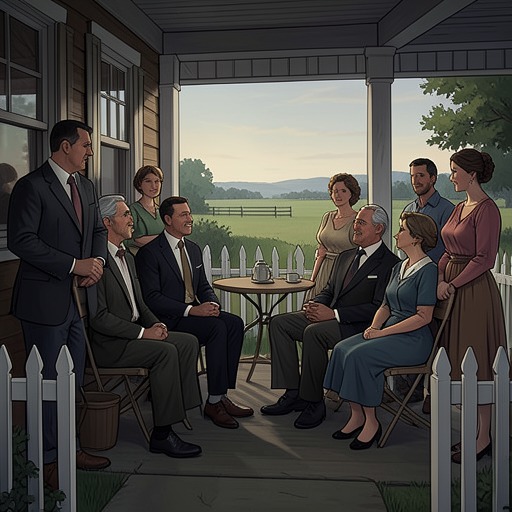
Phil Burbank’s sadism
The Power of the Dog (Thomas Savage Edition)Phil Burbank’s sadism is both a personal appetite for dominance and a way of arranging life on the ranch around tests of toughness. He delights in provoking his brother George Burbank and treats vulnerability as an opening for humiliation. Yet his response to a Sunday spectacle of exploding magpies reveals a limit: he can recognize violence as entertainment while still recoiling from the scene before it is finished.
Disposition and Power
Phil is presented as brilliant, physically imposing, and contemptuous of weakness. His intelligence and eloquence do not temper his cruelty: he is described as a vicious sadist whose thirst for dominance accompanies a seething disdain for anyone who seems weak. The combination makes his cruelty more than a temper or an occasional lapse. It is a way of asserting superiority, particularly where another person’s embarrassment can be made public.
That pattern is clearest in his dealings with George. George is stocky, silent, decent, and gentle, and Phil likes to get his goat. When Phil makes a sexual joke about the testicles removed during cattle castration, he does so in front of the hired men; George blushes. The audience matters. Phil’s pleasure lies not only in the coarse joke but in making his brother absorb it under the ranch hands’ gaze, where George’s discomfort becomes part of the performance.
The brothers’ closeness sharpens the cruelty. They are not merely business partners but joint owners of the largest ranch in their Montana valley, and they have slept in the room they shared as boys for forty years. That long, intimate history gives Phil repeated access to George, but it does not produce tenderness between them. Instead, the contrast between Phil’s needling and George’s gentle nature makes their shared life a setting in which Phil can continually test and unsettle his brother.
Violence as Ranch Practice
Phil’s authority is also expressed through his handling of animals. He always performs the castrations, cutting away the scrotum, extracting the testicles, and throwing them into the fire where the branding irons glow. The account is physical and unsparing: there is surprisingly little blood, and the testicles soon explode in the fire. Phil turns this routine violence into an occasion for a sly joke, calling them mountain oysters and telling young ranch hands that eating them might help if they are fooling around with girls. His ease with the procedure and his humor about it place bodily violence and social provocation in the same register.
The contrast over gloves gives that register a visible shape. Ranch hands wear gloves for nearly every other task—to guard against rope burns, splinters, cuts, and blisters—but not for castration. Phil, meanwhile, refuses gloves even while roping, fencing, branding, pitching hay, or riding. He scorns protection and bears blisters, cuts, and splinters with his lean, powerful hands. In this setting, toughness is enacted through the body: avoiding injury can be treated as weakness, while enduring it helps establish standing. Phil’s own refusal to protect himself therefore sits alongside his contempt for weakness in others, turning a practical choice into a repeated demonstration of the values he imposes.
The Magpies
A Sunday gathering behind the bunkhouse makes Phil’s relation to cruelty less straightforward. The men have young magpies, birds regarded as pests because they pick at sores on horses and cattle and may attack a newborn calf’s eyes. One ranch hand, who has dynamite caps and says he used to do blasting, pushes a cap and fuse into each bird. Men gather to watch; Phil arrives and asks what is happening. Another man calls it ass-ass-ination, making a joke of the impending killing before the birds are tossed into the air.
As the magpies rise and explode one by one, feathers drift down like ash. Phil considers the deaths quick, quicker than shooting the birds or wringing their necks, and not purposeless because the spectacle has provided Sunday amusement. That judgment shows how readily he can fit killing into a logic of usefulness and entertainment. But it does not settle his response. After the first two birds explode, he frowns and walks away, unsure whether he approves of what the man has done. His departure does not undo his initial appraisal, but it prevents the scene from presenting him as simply delighted by every act of cruelty.
Cruelty, Concealment, and Limits
The magpie episode also places Phil’s private judgment beside the ranch’s social performance. The men gather to watch, one jokes, and Phil initially treats the spectacle as a source of amusement. When George asks what the men are doing out back, Phil says they are shooting at targets. The answer disguises the actual event, leaving George outside the scene even as he shares the ranch and the brothers’ daily life. Phil’s cruelty thus operates through both direct humiliation and control over what others are allowed to know.
His response remains divided: he can find the birds’ deaths entertaining, yet the explosions eventually make him frown and leave. That hesitation is significant precisely because it does not amount to a change of character or a repudiation of violence. Across the castration ritual, the public teasing of George, and the Sunday killing, Phil repeatedly treats pain as compatible with work, humor, or amusement. The magpies expose a boundary in his tolerance, but the evidence does not define that boundary as compassion. His sadism is therefore most revealing not as unbroken appetite, but as a pattern in which dominance and entertainment coexist with moments of unease.